8 mins read
WordPress Performance Consulting: Scaling Your Agency
Share Article :


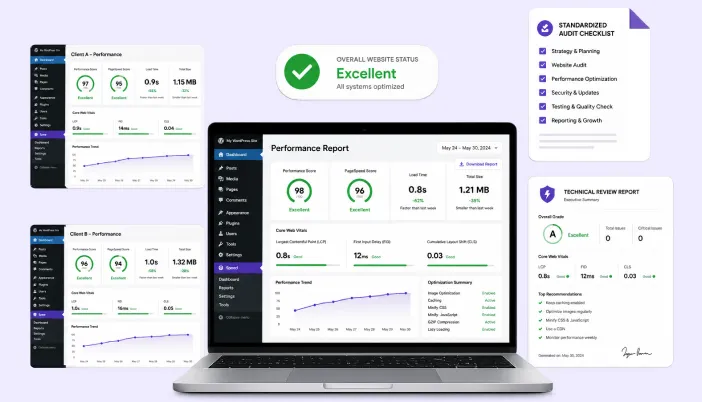
In this blog, you will learn why WordPress performance consulting has become a real, standalone service line, why so many agencies plateau once they start offering it, and a practical way to actually scale it without burning out your best developer.
Here’s a number worth knowing if you’re weighing whether this is worth building out: the services side of the web performance market is growing faster than the tools side, at close to a 10% compound annual rate, precisely because most businesses don’t have the internal expertise to fix their own site’s performance. That gap between “businesses that need this” and “businesses that can do it themselves” is exactly where a consulting practice lives.
If you’ve already done a few performance audits for clients and they went well, you’ve probably felt the next problem coming: how do you do this for twenty clients instead of two, without it eating every hour of your week?
Why this is a real service line, not just a favor you do for clients
A lot of agencies stumble into performance work almost by accident. A client complains their site is slow, someone on the team fixes it, and suddenly that person is the unofficial “speed person” for every account. That’s not a strategy, that’s a bottleneck waiting to happen.
Performance consulting deserves to be treated like any other service line, with its own process, its own pricing, and its own growth plan, because the demand behind it is real and growing.
| What’s driving demand | Why it matters for consulting |
| Google’s Core Web Vitals updates keep tightening | Clients who passed last year may be failing now, without warning |
| Most businesses lack in-house performance expertise | They need an outside specialist, not just a generalist developer |
| Site speed is now tied directly to revenue in most studies | Clients are more willing to pay for measurable fixes than vague “SEO help” |
| WordPress sites accumulate plugin and theme bloat over time | This isn’t a one-time fix, it’s ongoing, which supports recurring revenue |
What WordPress performance consulting actually involves
Before scaling anything, it helps to be clear on what the service actually is, since “performance consulting” can mean very different things depending on who’s selling it.
- Auditing – running a proper technical review of a site’s Core Web Vitals, server response time, and asset weight, not just a single PageSpeed score
- Fixing – implementing the actual changes: caching, image optimization, database cleanup, code cleanup, hosting recommendations
- Monitoring – tracking scores over time, since a plugin update six months later can undo months of work
- Reporting – translating technical improvements into business language clients actually care about, like bounce rate and conversion impact
- Advising – helping clients make smarter decisions going forward, like which plugins are safe to install and which hosting tier actually fits their traffic
Most agencies start out doing all five of these manually, for every client, from scratch. That’s fine at two or three clients. It becomes the actual bottleneck once you’re trying to grow.
The scaling problem, and why most agencies hit it
Note: The wall most agencies hit isn’t a lack of clients wanting this service. It’s that the process depends entirely on one skilled person’s time, and that person can only run so many manual audits in a week.
If your performance consulting process currently looks like “our best developer opens the site, pokes around, and writes up what they find,” you have a service, but you don’t have something that scales. Every new client adds linearly to that one person’s workload, and eventually either quality drops, turnaround times slip, or that person burns out.
| Signs you’re still doing this manually | Signs you’re ready to build a repeatable process |
| Every audit looks a little different depending on who did it | You have a checklist that produces consistent results regardless of who runs it |
| Pricing is decided case by case | You have defined packages with clear scope and price |
| One person is the only one who really understands the fixes | At least two people on the team can run a full audit independently |
| Reporting is a custom document written from scratch each time | You have a template that just gets filled in with each client’s numbers |
How to actually scale it
1. Productize the audit
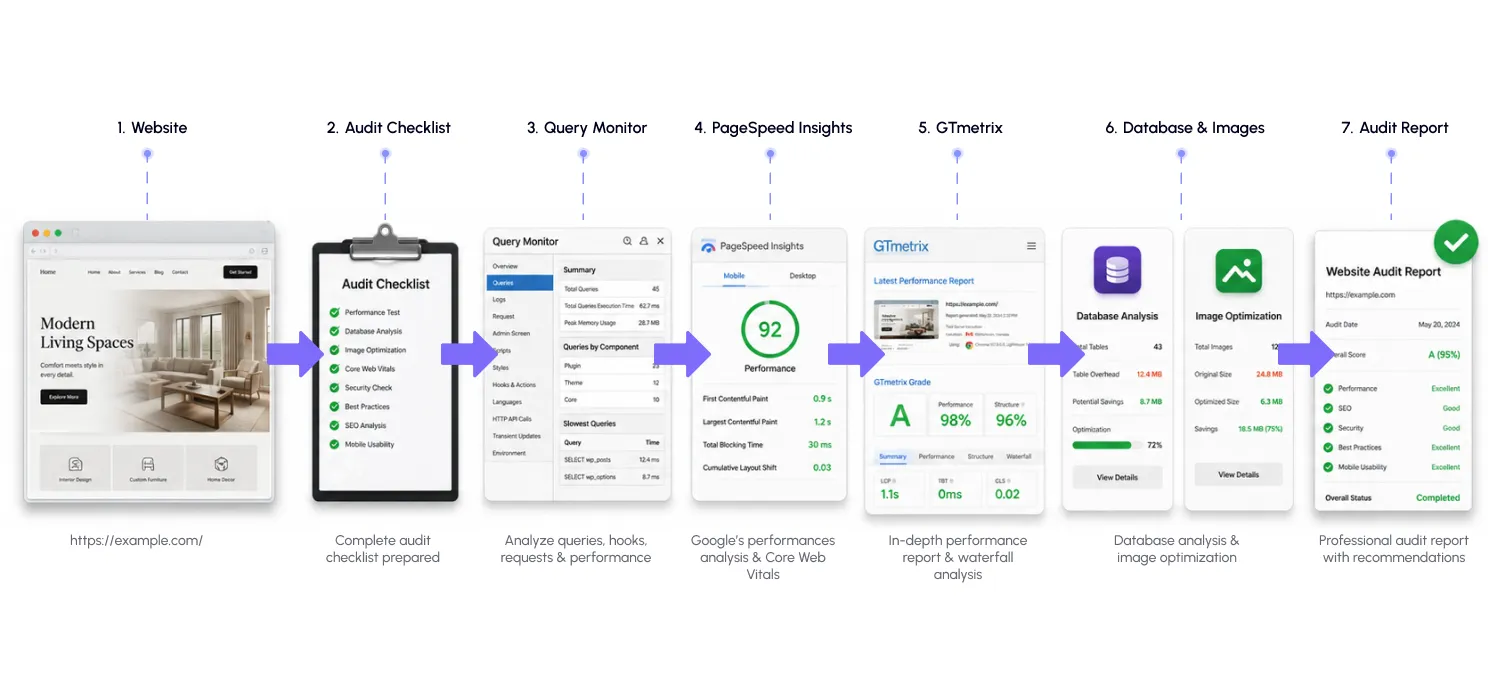
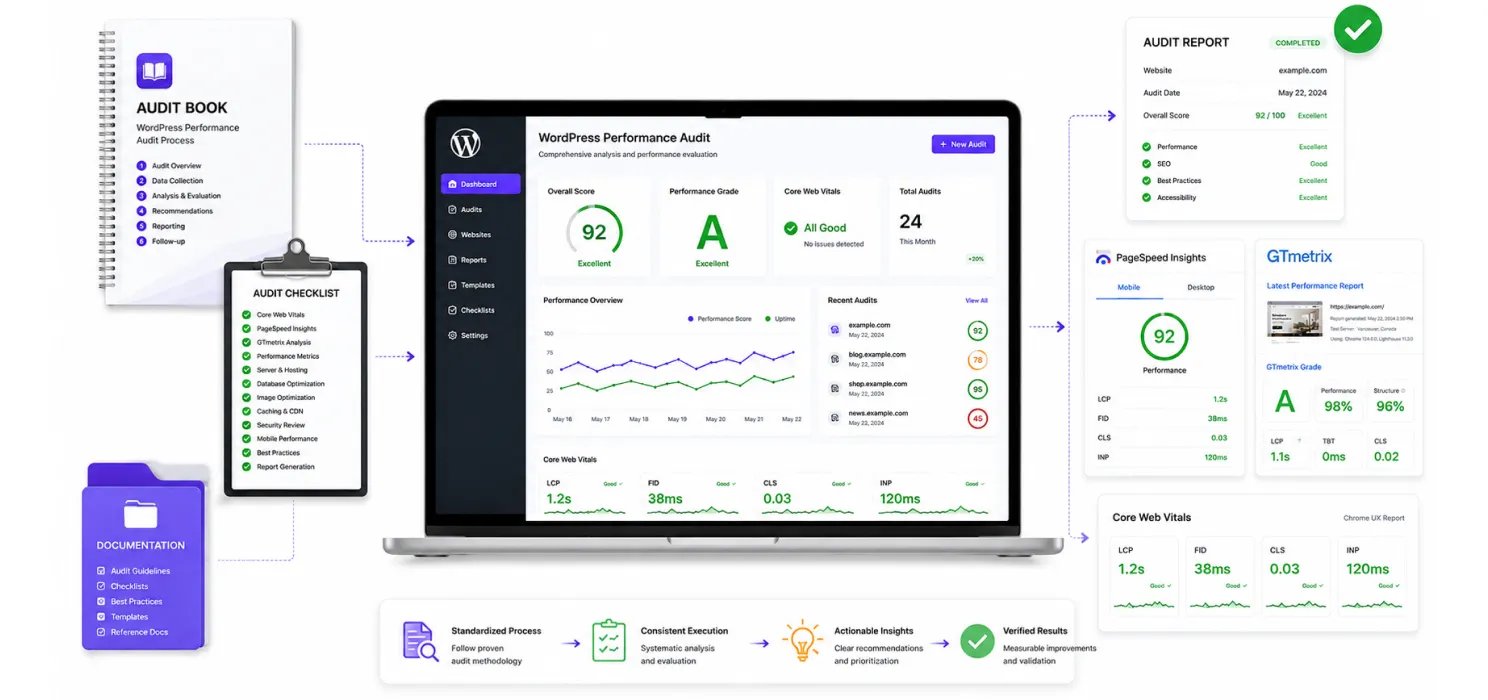
This is the single biggest unlock. Instead of a free-form investigation each time, build a standard checklist covering hosting, caching, database health, image optimization, and Core Web Vitals scores, in the same order, every time.
- Document the checklist somewhere your whole team can access and follow
- Include specific tools to run at each step (Query Monitor, PageSpeed Insights, GTmetrix) so results are comparable across clients
- Turn the output into a template report, so writing it up takes minutes, not hours
Tip: Time your current manual audit process from start to finish, honestly. Most agencies are surprised to find a “quick audit” is actually taking six or eight hours once you count research, testing, and writing the report. That number is your baseline for measuring how much a productized process actually saves you.
2. Separate the audit from the fix
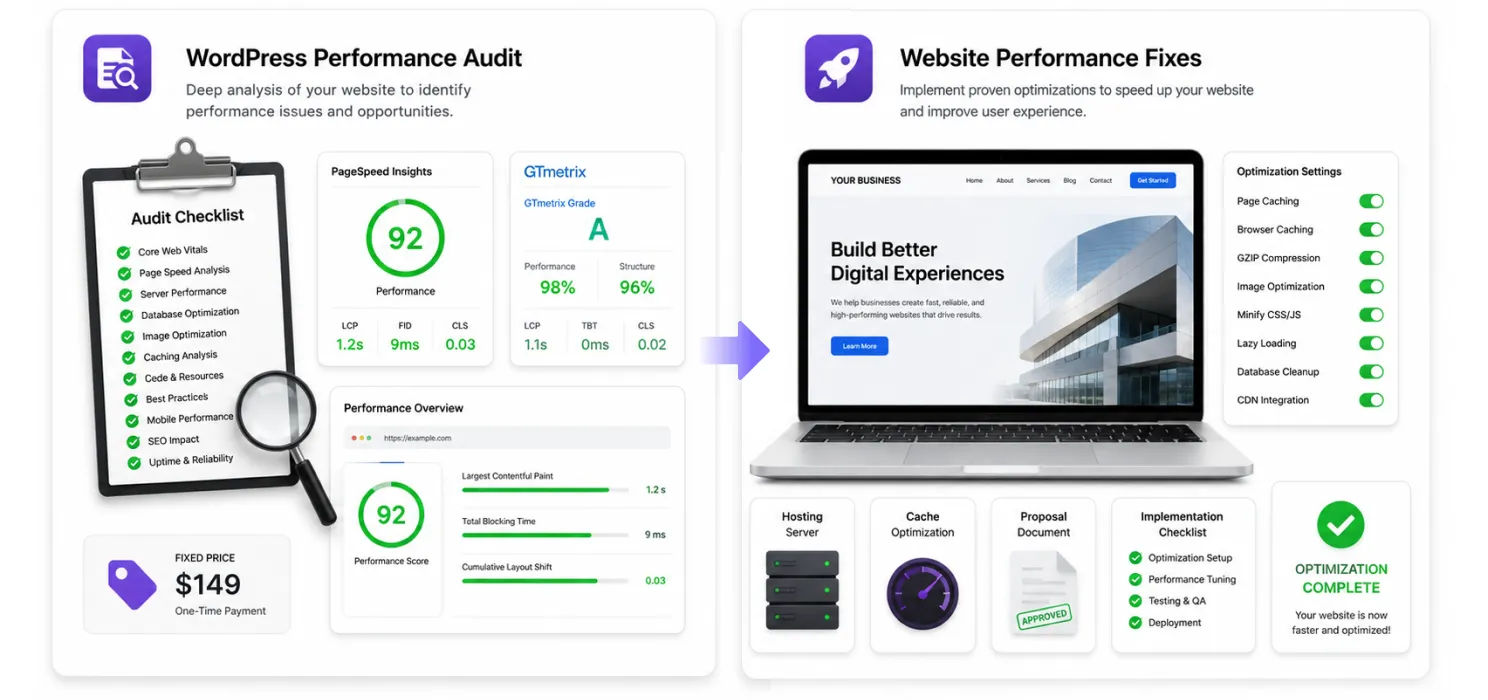
Selling these as two distinct steps, rather than one blurry engagement, does two things: it gives clients a lower-commitment entry point, and it gives you a natural upsell once the audit is done.
- Sell the audit as a fixed-price, fixed-scope deliverable
- Present the fix work as a separate proposal, scoped from the specific findings
- This also protects your margin, since fixes vary wildly in effort from client to client, while audits stay fairly consistent
3. Build (or buy into) a shared tooling stack
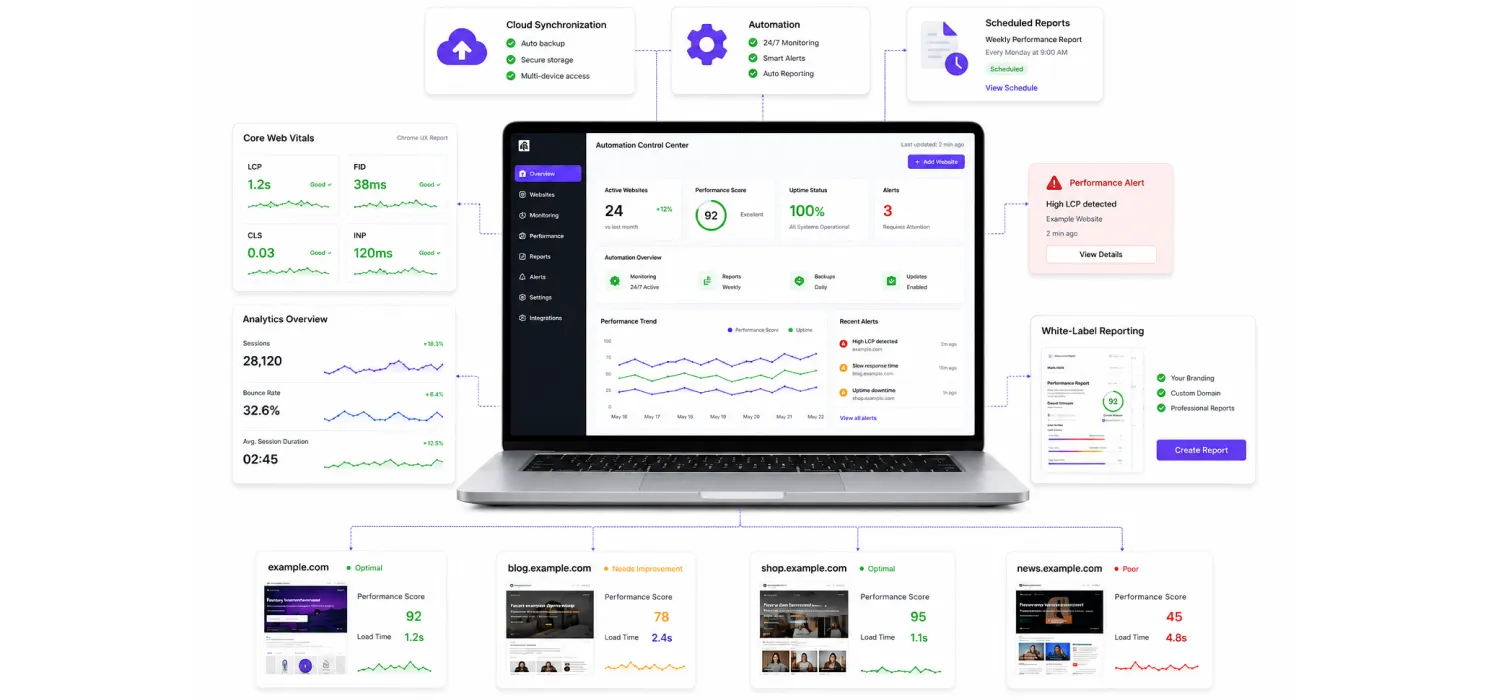
Every hour your team spends manually checking things a tool could check for them is an hour that doesn’t scale.
- Standardize on one set of monitoring and testing tools across all client accounts
- Look into white label reporting tools that can pull real Core Web Vitals data automatically, rather than screenshotting PageSpeed Insights every time
- Automate what you can of the ongoing monitoring, so a human only steps in when something actually needs attention
4. Train more than one person to run the full process
As one guide on scaling consulting work put it:
“Scaling a consulting firm requires you to think beyond your next engagement.”
That’s the mindset shift that matters here. If the entire performance practice lives in one person’s head, you don’t have a scalable service, you have a very skilled bottleneck with a job title.
- Pair a junior or mid-level developer with your current performance lead on real client audits
- Have them run a full audit solo, then review it together before it goes to the client
- Within a handful of real audits, most competent developers can run the standard checklist independently
5. Move toward retainers, not one-off projects
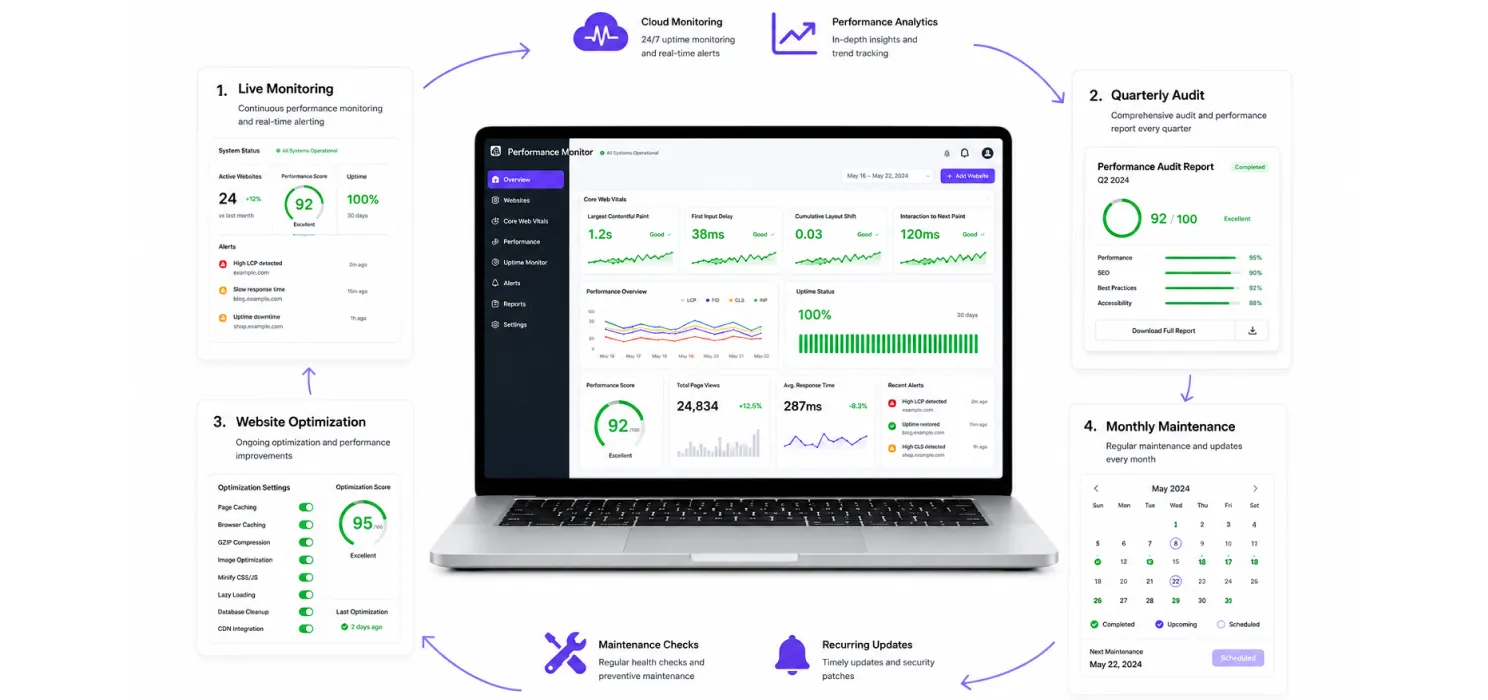
A one-time fix is good revenue once. A monitoring and maintenance retainer is revenue every month, and it fits naturally with how WordPress sites actually behave, since performance drifts over time as plugins update and content grows.
- Offer a monthly retainer that includes ongoing monitoring, a quarterly re-audit, and a set number of fix hours
- This also smooths out your team’s workload, since retainer clients need periodic attention rather than one intense burst of work
- Retainers make revenue more predictable, which makes hiring and planning decisions far easier
6. Consider white labeling for overflow
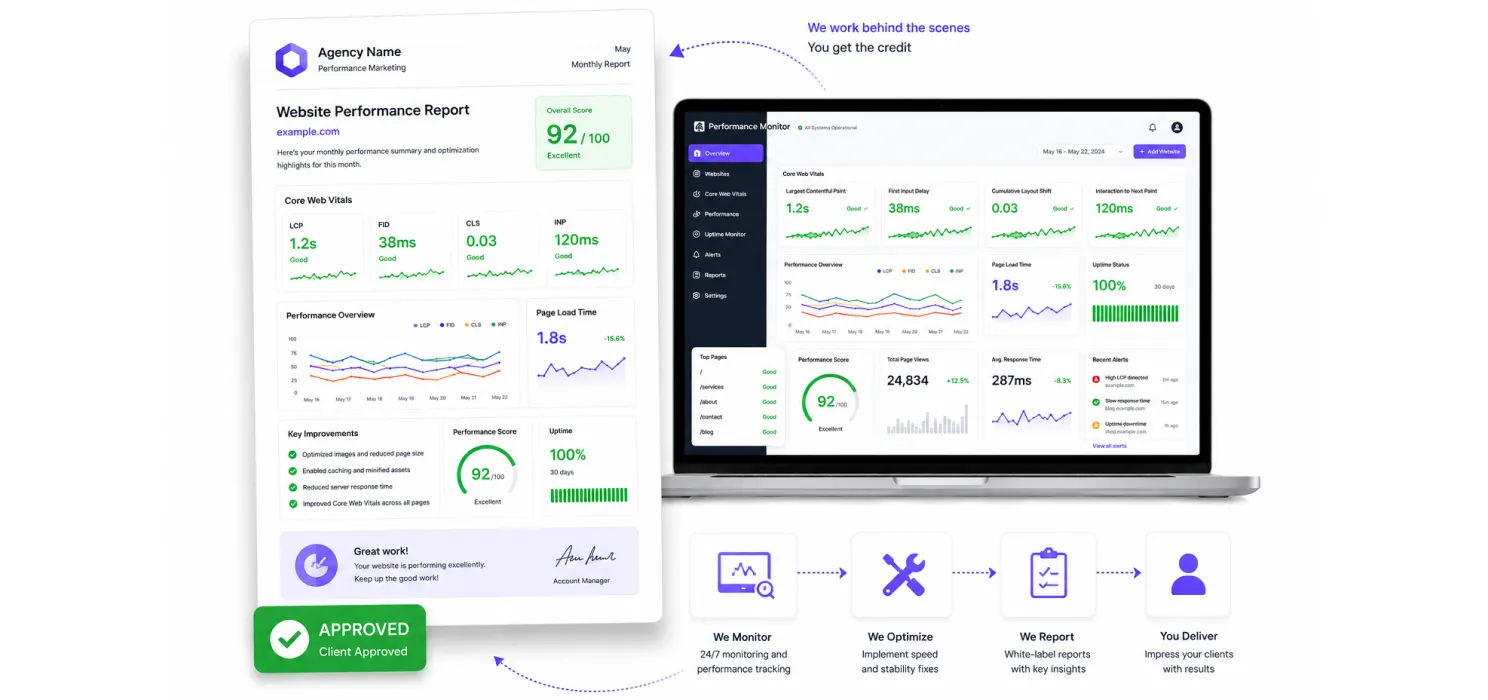
Not every agency needs to build every part of this in-house from day one.
- A white label performance partner can absorb overflow work during busy periods without you hiring ahead of demand
- This works especially well for agencies whose core business isn’t performance work specifically, like general web design or SEO agencies adding this as a new offering
- Just make sure any white label partner’s process matches the quality bar you’d want your own name attached to
| Offer | What it typically includes | Best for |
| One-time audit | Full technical review, prioritized report | Clients testing the waters, or a lead-generation offer |
| Fix project | Implementation of audit findings, before/after report | Clients who got an audit and want the work done |
| Monthly retainer | Ongoing monitoring, quarterly re-audit, set fix hours | Clients who understand performance is ongoing, not one-time |
Starting with the audit as a lower-cost entry point tends to convert better than trying to sell a full retainer cold. Once a client sees real, documented findings about their own site, the case for ongoing work makes itself.
Common mistakes agencies make while scaling this
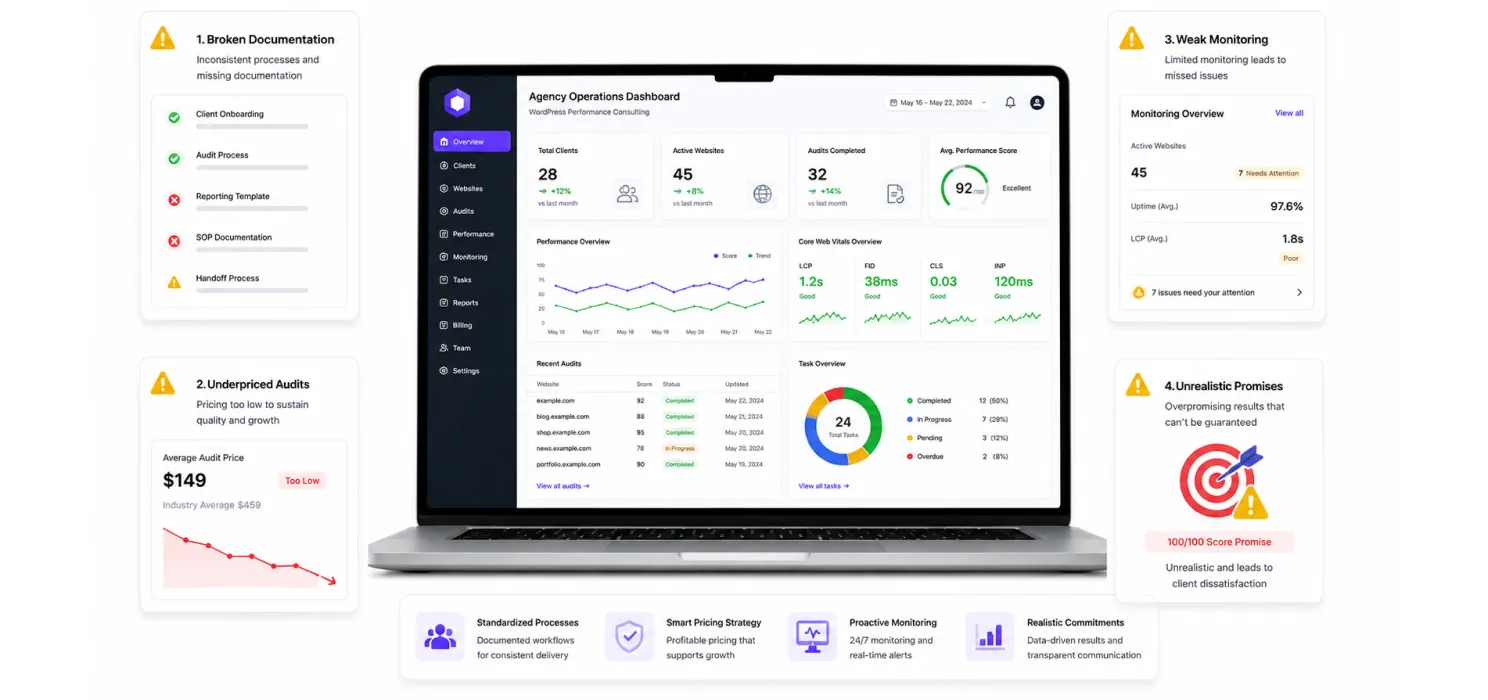
- Trying to scale before the process is actually documented, which just multiplies the inconsistency instead of fixing it
- Pricing audits too cheaply as a “loss leader,” then struggling to make the fix work profitable enough to matter
- Letting monitoring quietly lapse for retainer clients, which is usually the first thing to slip when the team gets busy, and the first thing clients notice when it does
- Promising specific ranking outcomes tied directly to performance work, when Core Web Vitals are one signal among many, not a guarantee
Wrapping up
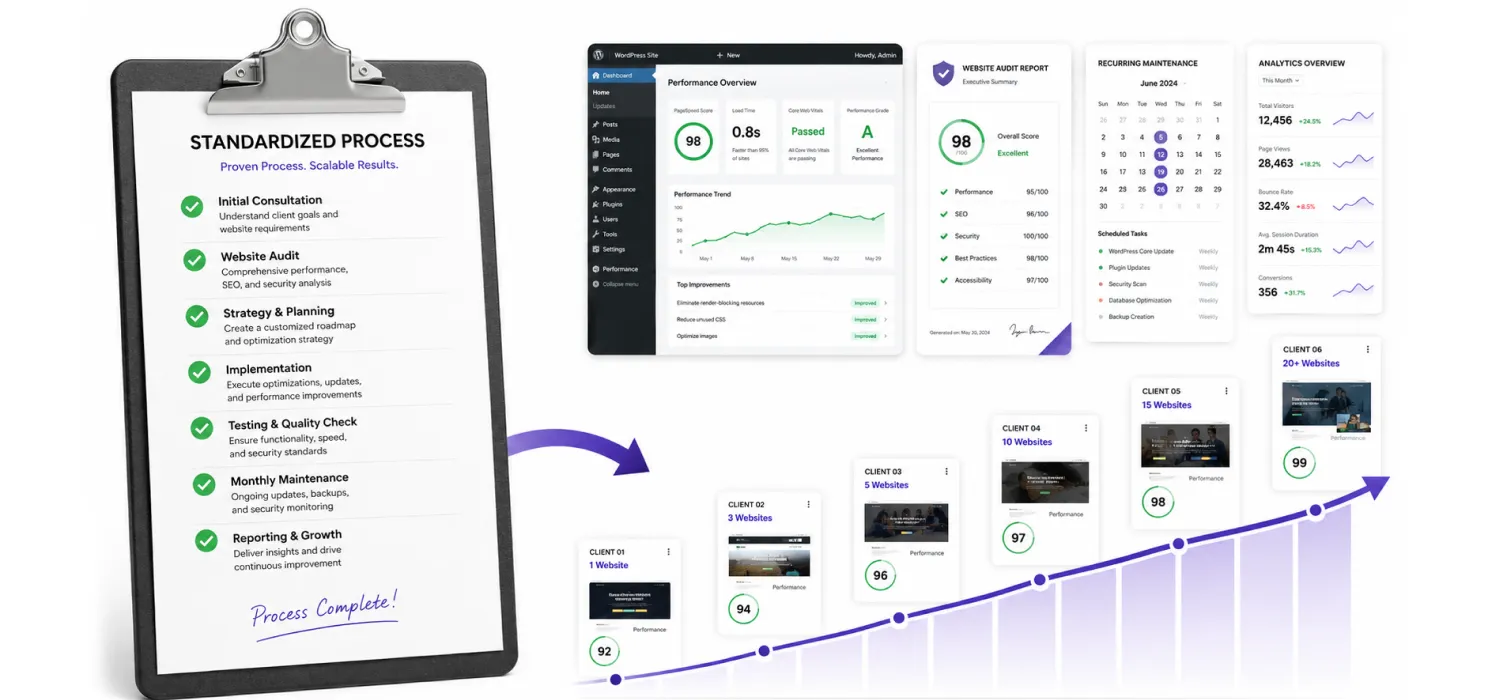
WordPress performance consulting is a genuinely growing service line, not a temporary trend, because the underlying problem (most businesses can’t fix their own site’s speed) isn’t going away. The agencies that struggle with it usually aren’t struggling because demand is weak. They’re struggling because the whole practice still depends on one person doing everything from memory.
Document the process, separate the audit from the fix, train more than one person to run it, and move toward retainers where it makes sense. None of that is complicated, but doing it deliberately is usually the difference between a service that grows with your agency and one that quietly caps how big your agency can get.

Frequently Asked Questions
Find answers to common questions about starting, managing, and scaling website performance optimization services.
Do we need a dedicated performance specialist to start this?
Not at first. One capable developer with a documented process can start it. The specialist role becomes valuable once you’re training a second and third person to run the same process consistently.
How many clients can one person realistically handle with a productized process?
It varies by scope, but agencies who’ve productized the audit typically see it drop from a full day to two or three hours, which meaningfully changes how many clients one person can support.
Should we build our own monitoring tools or use existing ones?
For most agencies, existing tools (with white label reporting layered on top) make far more financial sense than building custom tooling, at least until the practice is large enough to justify the investment.
Is this worth adding if we're primarily a design or SEO agency?
Often, yes. Performance work touches both. A design agency can offer it as a value-add during builds, and an SEO agency can offer it as a natural extension of technical SEO work clients already expect.