9 mins read
WordPress Core Web Vitals agency: why outsource?
Share Article :


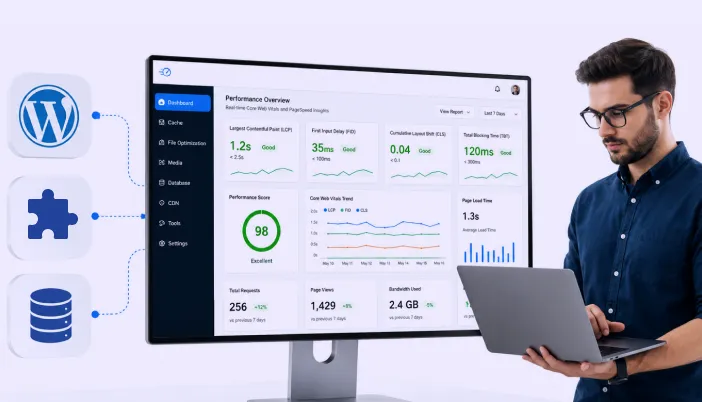
In this blog, you will learn what Core Web Vitals actually are, why WordPress sites tend to struggle with them more than other platforms, and why so many businesses end up handing this work to a specialist agency instead of trying to fix it in-house.
Here’s a number worth sitting with: only about a third of websites pass all three Core Web Vitals at once. Two out of every three sites are failing at least one. If you’ve checked your own site and seen a red or yellow score, you’re not the exception. You’re the norm.
So the real question isn’t “why is my site failing.” It’s “what’s actually worth doing about it.” And for a lot of WordPress site owners, the honest answer turns out to be outsourcing it to people who do this every day.
A quick recap: what are Core Web Vitals
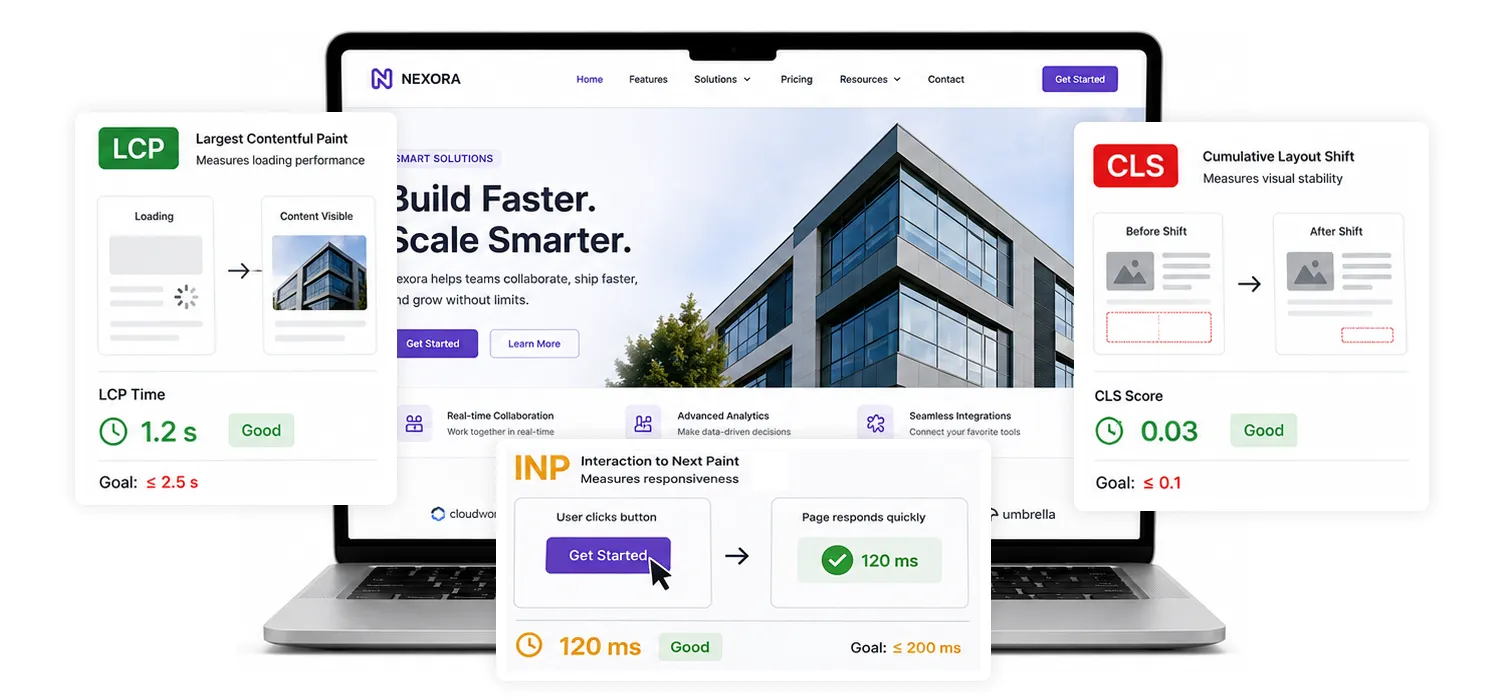
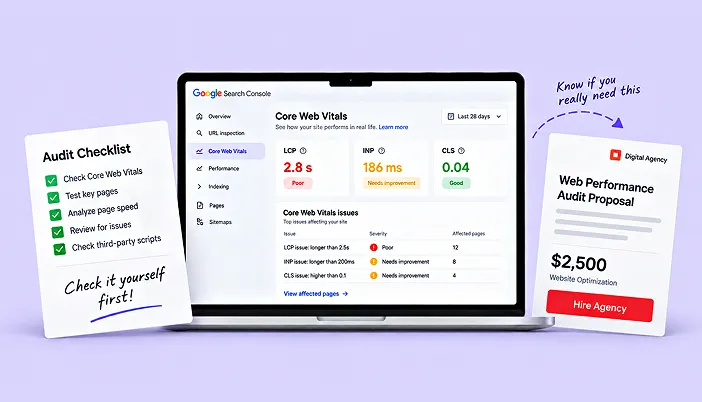
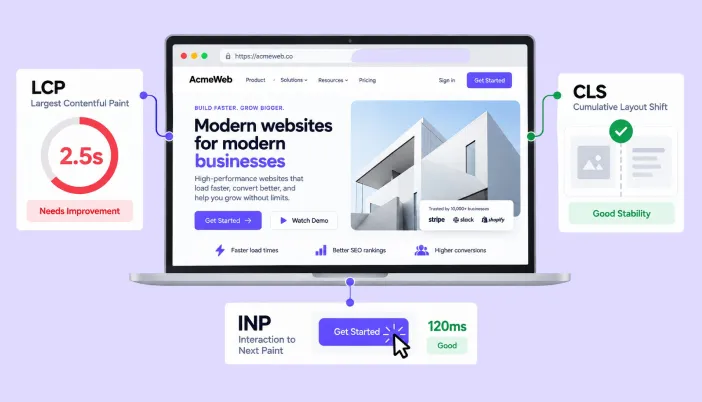
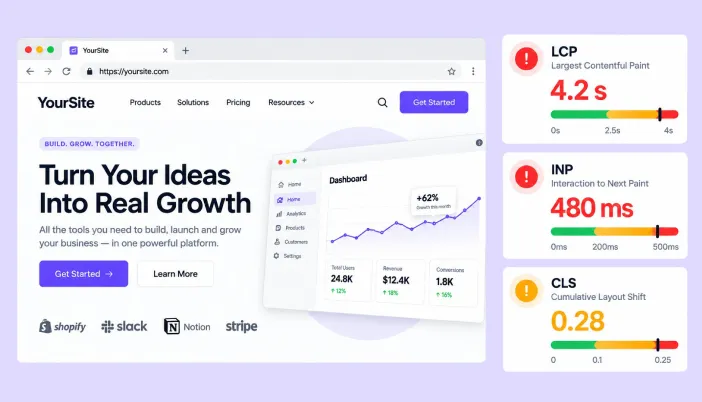
Core Web Vitals are three specific metrics Google uses to judge how a page actually feels to use, not just how fast it technically loads:
- LCP (Largest Contentful Paint) – how long it takes for the biggest visible thing on the page (usually a hero image or headline) to show up
- INP (Interaction to Next Paint) – how quickly the page responds when someone clicks, taps, or types
- CLS (Cumulative Layout Shift) – how much stuff jumps around on the page while it’s loading
Google now treats all three as a ranking signal, and it checks all three together. Pass two out of three and you still fail the overall assessment. That’s a detail a lot of site owners miss.
| Note: Google measures Core Web Vitals using real visitor data (called “field data”), not just a lab test you run once. So a good Lighthouse score in your dashboard doesn’t automatically mean you’re passing for actual users, especially on slower phones or weaker connections. |
Why WordPress sites struggle with this more than most
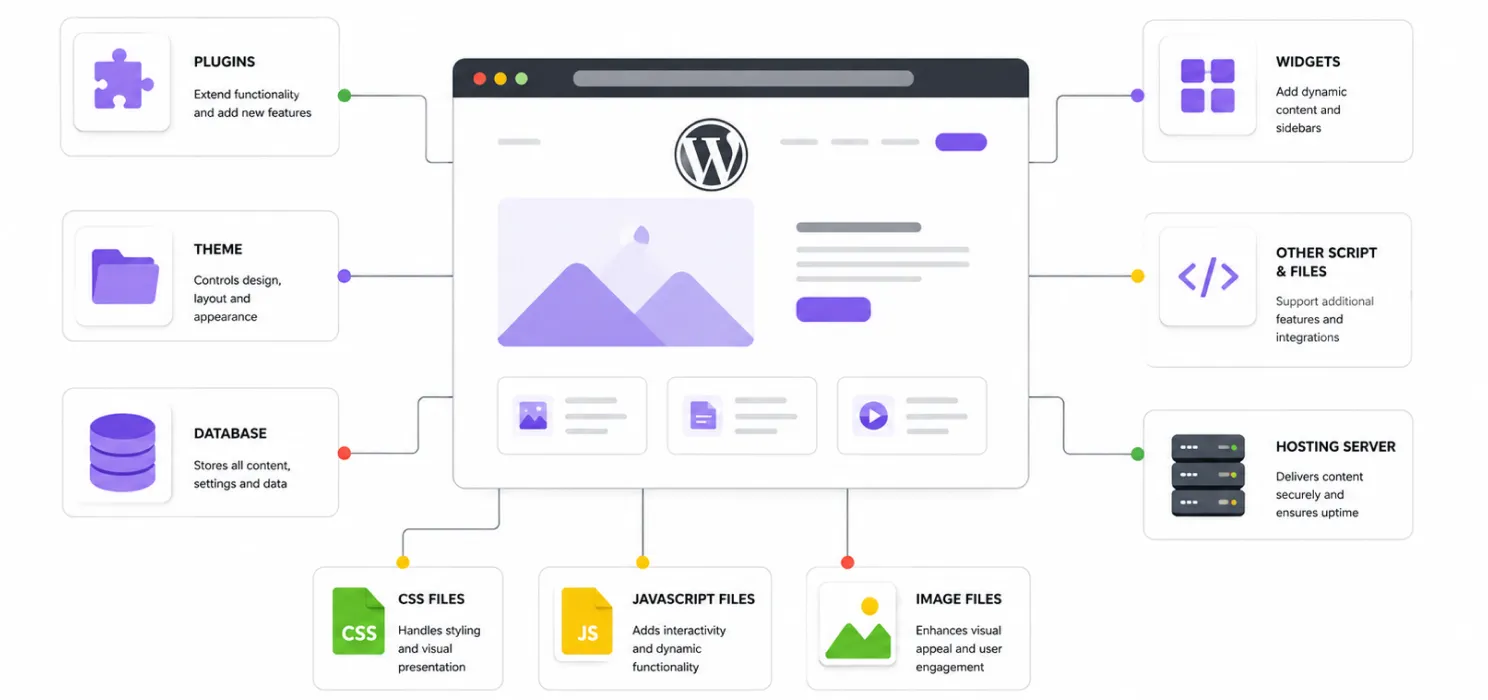
WordPress powers a huge share of the web, and that’s exactly the problem. Most WordPress sites are built by stacking a theme, a page builder, a dozen-plus plugins, and years of content on top of each other. Every one of those pieces can quietly hurt a Core Web Vitals score:
- Page builders often add extra CSS and JavaScript that isn’t actually needed on every page
- Plugins load their own scripts and styles, even on pages where they do nothing
- Ads, sliders, and embedded widgets are common causes of layout shift
- Uncompressed images from years of uploads drag down LCP
- Cheap hosting adds delay before the page even starts rendering, which drags LCP down further
None of this is any one person’s fault. It’s just what happens to a site that’s been built and added to over time, by different people, with different priorities. The end result is a site that looks fine but scores poorly the moment Google actually measures it. That is why website speed matters beyond just getting a better score.
What it actually takes to fix this properly
Here’s where things get a bit uncomfortable for a lot of business owners: fixing Core Web Vitals isn’t a single setting you flip. It touches several different skill sets at once.
| Area of work | What it actually involves |
| Image and asset optimization | Compressing, resizing, and lazy-loading images without breaking layout, including using the WebP image format where appropriate |
| JavaScript and CSS cleanup | Finding and removing unused code, deferring what isn’t needed immediately |
| Server and hosting tuning | Caching, database cleanup, and sometimes a full hosting migration |
| Layout and design review | Reserving space for images, ads, and fonts so nothing jumps around |
| Ongoing monitoring | Tracking scores over time, since one plugin update can undo months of work |
That’s a real spread of skills. It’s part front-end development, part server administration, part design discipline, and part ongoing maintenance. Very few in-house teams have all of that sitting around, especially at a small or mid-sized business.
Tip: Before deciding whether to outsource, run your site through PageSpeed Insights and note which specific metric is failing. A pure LCP problem might just need image and hosting work. A failing INP score usually means a deeper look at plugins and JavaScript is needed, which takes more hands-on time.
DIY vs hiring a specialist agency
| Doing it yourself | Working with a WordPress Core Web Vitals agency | |
| Time investment | Weeks to months, learning as you go | Usually days to a few weeks, done by people who already know the fixes |
| Risk of breaking the site | Higher, especially with theme or plugin edits | Lower, since they’ve made these changes on many sites before |
| Ongoing monitoring | Easy to forget about after the initial fix | Usually built into the service |
| Cost | Lower upfront, but your time has a cost too | Higher upfront, but often cheaper than the hours it actually takes in-house |
| Depth of fix | Often surface-level (a plugin here, a setting there) | Tends to address root causes across server, code, and content |
Neither column is “wrong.” A small blog with a simple theme and a handful of plugins can often be fixed by a motivated site owner following a good guide. A business site with a page builder, an online store, and years of content usually can’t be fixed the same way, and that’s where an agency starts to make real financial sense.
Why businesses actually choose to outsource this
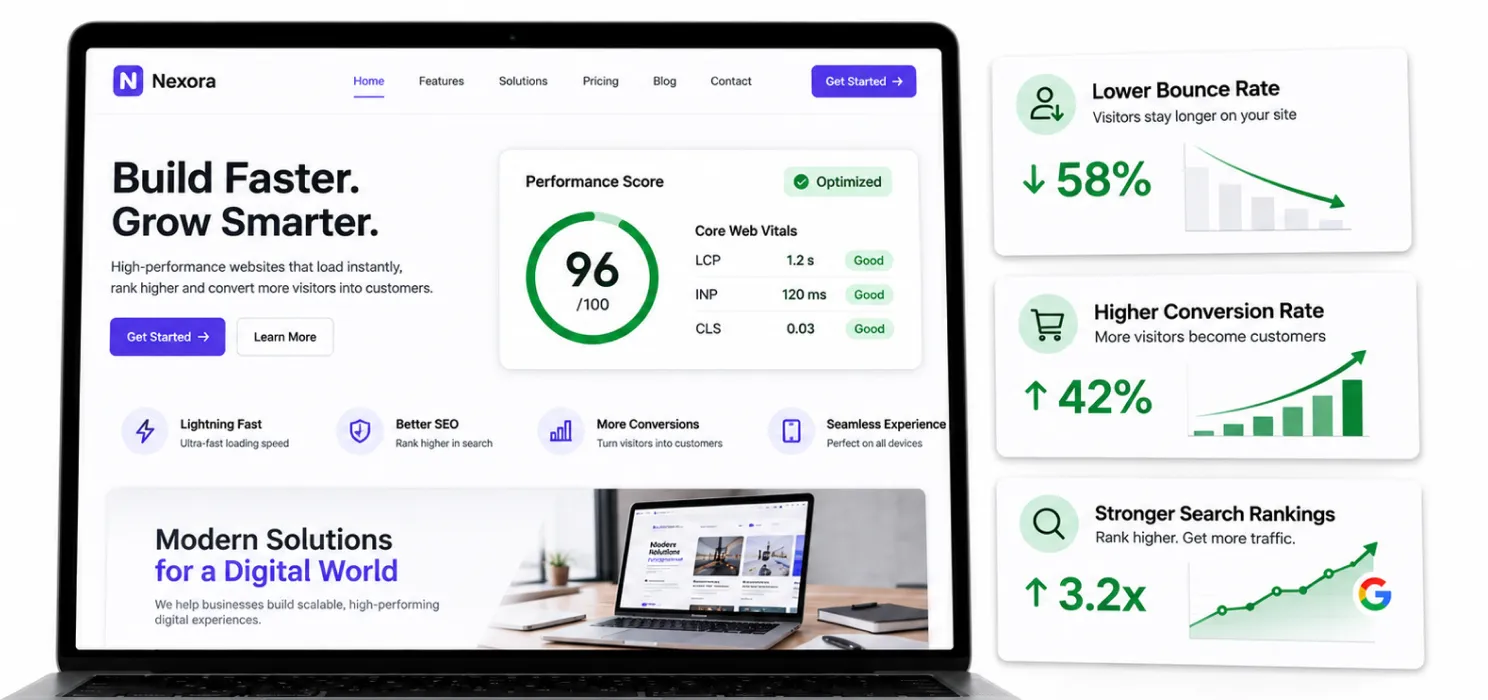
The pattern shows up again and again once you actually look at agency case studies: sites that pass Core Web Vitals tend to see real, measurable business results, not just a greener dashboard. Lower bounce rates, better conversion rates, and more resilient rankings all come up consistently once the fix is done properly.
Here’s how one agency summed up what outsourcing this actually gives a business:
“The real appeal of white label site speed work is not just outsourcing. It is operational leverage.”
That’s really the case for hiring specialists in one sentence. It’s not just “someone else does the work.” It’s that a team who fixes Core Web Vitals for a living has already solved the weird edge cases your site is about to run into, and they solve them faster than a generalist would starting from scratch.
A few concrete reasons this keeps happening:
- The learning curve is steep. Understanding why INP is failing on a specific page often means reading minified JavaScript and tracing which script is actually blocking the main thread. That’s a skill, not a quick fix.
- It’s easy to fix one metric and break another. Lazy-loading images can help LCP but hurt CLS if it’s done without reserving space. Someone who’s done this before knows the traps.
- Plugin updates undo progress. A theme or plugin update can quietly reintroduce a problem that was already fixed. Ongoing monitoring catches this before it costs you rankings.
- In-house teams have other priorities. Most internal teams are busy running the business, not chasing a 200-millisecond improvement in interaction responsiveness.
- The cost of staying slow adds up. Every 100 milliseconds of extra load time has been tied to roughly 1% in lost conversions in industry research. On a site doing real revenue, that’s not a small number.
What a good WordPress Core Web Vitals agency actually does
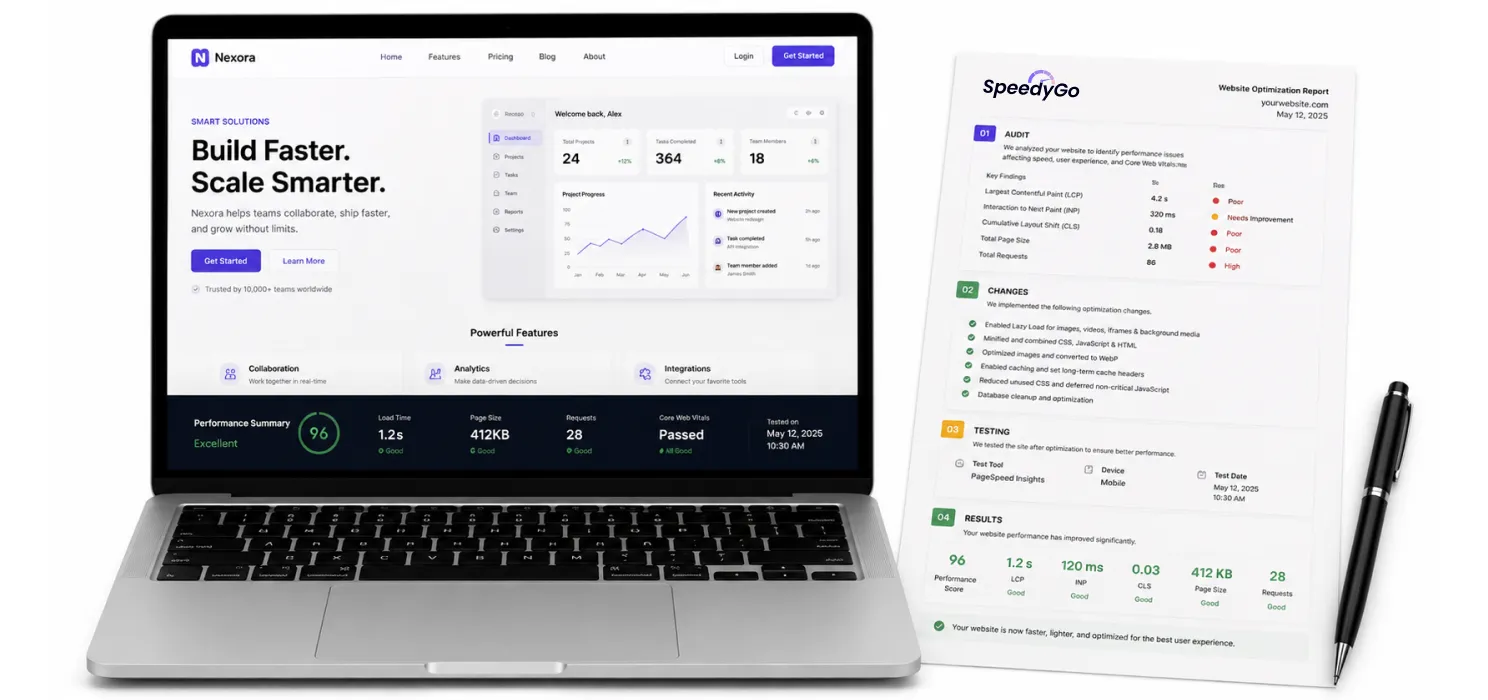
If you do decide to outsource, it helps to know what a proper process looks like, so you can tell a good agency from one just running an automated plugin and calling it a day.
- A real audit first. Not just a PageSpeed score, but a breakdown of which pages and which metrics are failing, and why.
- Fixes at the right layer. Server-level caching where it belongs, code-level fixes where they belong, and design changes only where they’re actually needed.
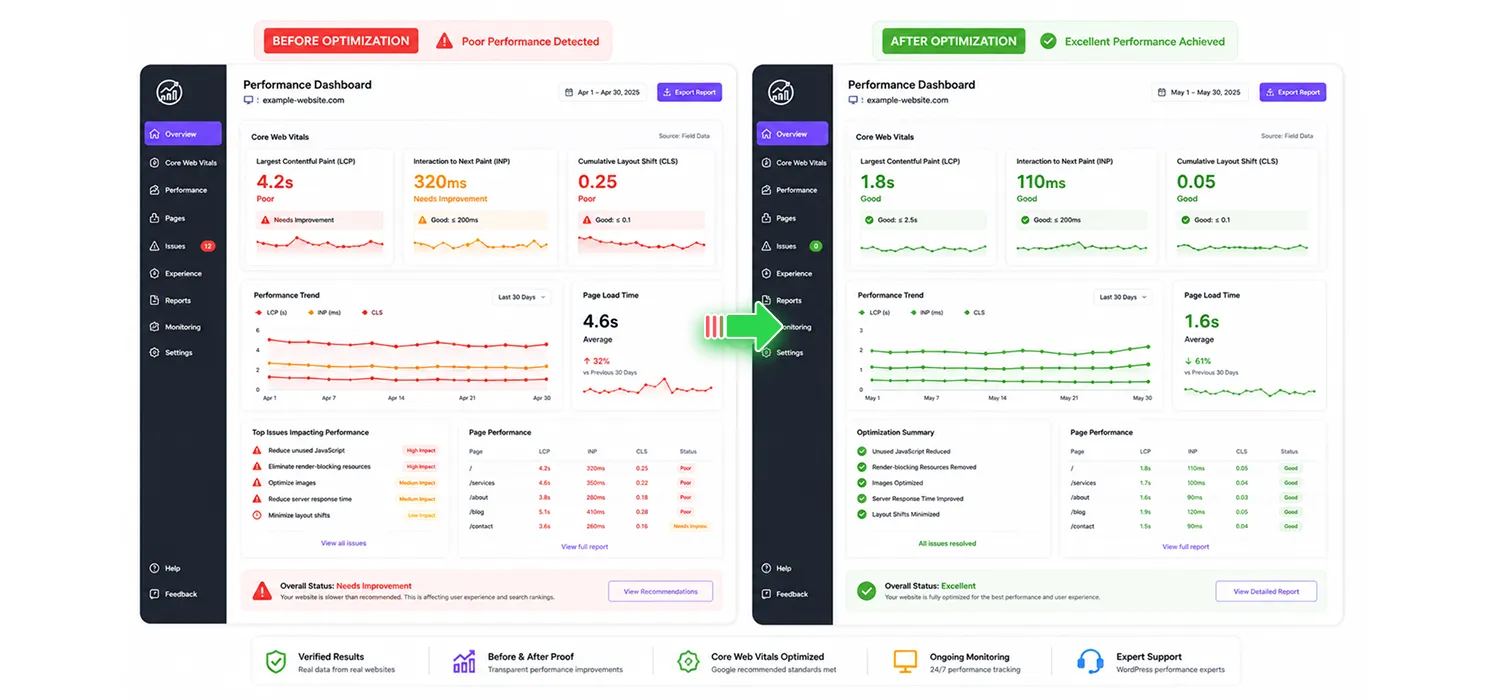
- Testing before and after. Changes get verified against real field data, not just a single lab test run once.
- Documentation. You should end up with a clear record of what was changed, not just a vague “we optimized it.”
- Ongoing monitoring. Scores get checked on a schedule, so a plugin update six months from now doesn’t quietly undo the work.
| Note: Be cautious of any agency promising a guaranteed 100/100 PageSpeed score. Because Core Web Vitals use real visitor data across different devices and connections, no one can promise a perfect score for every single visitor. What a good agency can promise is passing thresholds and steady improvement over time. |
How to choose the right agency
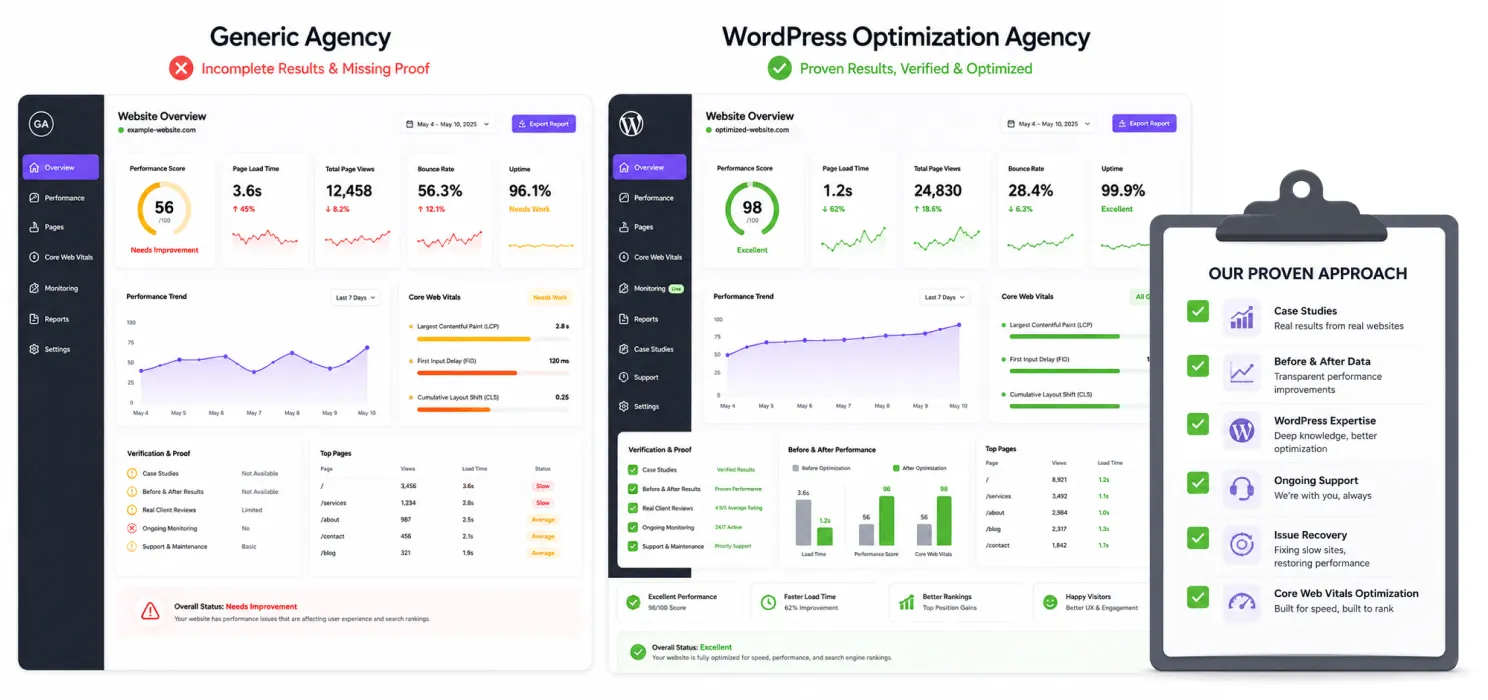
- Ask for before-and-after data from real client sites, not just general claims
- Ask specifically whether they work with WordPress regularly, since fixes differ a lot by platform
- Ask how they handle ongoing monitoring after the initial fix, not just the one-time cleanup
- Ask what happens if a fix breaks something on your live site, and how quickly they respond
- Ask whether they’re fixing all three metrics together, not just the easiest one to improve
Wrapping up
Core Web Vitals aren’t going away, and the bar keeps getting stricter, not looser. Trying to fix them alone is possible for a simple site, but for anything with real traffic, a page builder, and years of plugins layered on top of each other, it’s usually a job that needs several different skills working together at once.
That’s the actual case for outsourcing. Not because you can’t learn it yourself, but because a specialist agency has already made these fixes dozens of times, on dozens of different WordPress setups, and knows exactly where the traps are. If you’re looking for a tool to handle several WordPress performance tasks in one place, you can also explore SpeedyGo features. For a lot of businesses, that expertise ends up paying for itself the moment conversions and rankings start moving in the right direction.

FAQs
Isn't this something my web developer can just handle?
Sometimes, yes, if they specialize in performance work and understand how a WordPress speed optimization plugin fits into a broader performance strategy.
But a general WordPress developer who builds sites and one who specializes in Core Web Vitals are often different skill sets, the same way a general contractor and an electrician overlap but aren’t interchangeable.
How long does it usually take to see results?
Simple fixes (image compression, basic caching) can show up within days. Deeper JavaScript and INP work usually takes a few weeks, plus time for Google’s rolling data window to reflect the change.
Will this actually affect my rankings?
Core Web Vitals are one signal among many, not the whole algorithm. But in competitive niches where content quality is similar across sites, performance is often the tiebreaker that decides who ranks higher
Is outsourcing worth it for a small site?
Not always. A simple site with a light theme and a handful of plugins might genuinely be fixable with a weekend and a good guide. The value of outsourcing goes up sharply as your site gets more complex.